When I was younger, I sometimes felt that the future, creativity, and freedom I was searching for could only exist somewhere else. Travelling across Malaysia changed that completely.
The turning point came when I stopped looking at places merely as destinations and began seeing them as living stories.
I remember staying at an Iban longhouse and realising that Malaysia is not just diverse on paper; it contains worlds within worlds. You get the opportunity to meet communities whose way of life and hospitality carry something meaningful.
During my travels, I also encountered quieter moments that revealed another side of the country: an elderly trishaw rider in Penang still working because the pandemic had devastated his livelihood, and time spent with the Bajau Laut community, who showed how dignity and harmony can still exist even in hardship.
Those moments changed me because they made Malaysia feel human. Not abstract or political, but something fragile and alive. A country carried every day by ordinary people trying their best. I still see its flaws, but also its beauty and coexistence. And because I have seen that up close, I no longer take Malaysia for granted.
For me, the journey often matters as much as the destination itself. The destination may be the objective, but the journey is what gives a trip its meaning.
How you get there changes everything: the landscapes you pass through and the details you begin to notice.
I’ve always believed that trips feel more meaningful when you have to earn them.
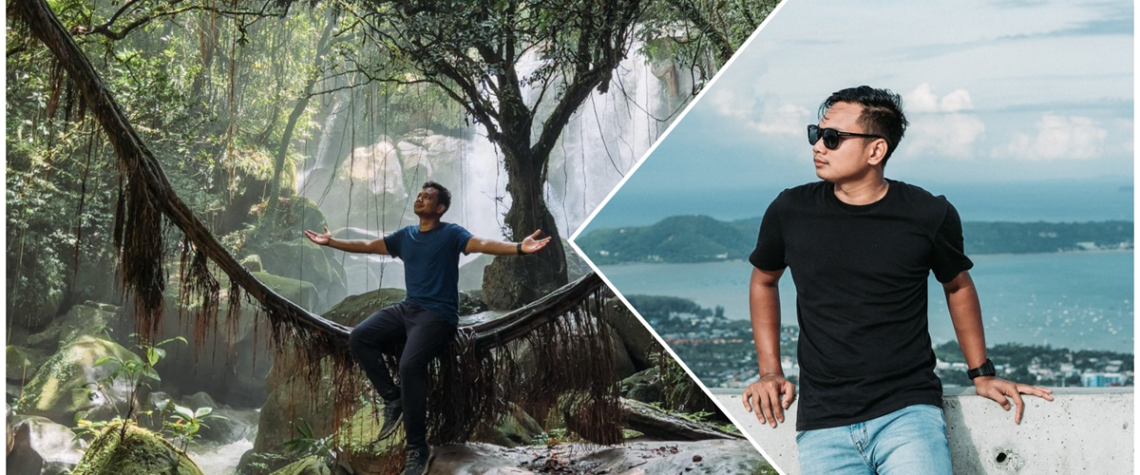
One journey I remember vividly is hiking to Air Terjun Susung in Sarawak. It was raining, and we had taken a boat through the downpour. We stayed overnight in a local house, sleeping on the floor, listening to the rain.
The next morning, we took another boat before finally reaching the waterfall. What stayed with me was not just the destination, but how the journey unfolded.
Taking the train to places like Dabong gave me a completely different relationship with the journey compared to simply driving. People often focus too much on speed, but how you get there can reshape the experience.
From Distance to Discovery
I read recently that the East Coast Rail Link (ECRL) is expected to be operational by January 2027, connecting the East Coast to the West Coast of Peninsular Malaysia.
This would change how people plan their trips. Places that once felt too far could become realistic weekend plans.
As someone from the East Coast, the idea of more people discovering the region excites me. I think of places like Kampung Mangkuk, Besut, and Kuala Kemaman—areas with their own rhythm and quiet beauty often missed by those rushing through.
If travel becomes more accessible, the impact could be significant – tourism would grow, and local communities would gain more opportunities. More importantly, it could help more Malaysians experience the East Coast beyond stereotypes.
On a personal level, it would also mean more time with family. I can imagine going back more often, allowing my children to spend more time with their grandparents.
Looking ahead, I hope Malaysians will not just move faster, but also become more open to discovering their own country.
Because for me, Malaysia stopped being just the place I came from. It became a place I feel proud to keep discovering.
*This article was written by Fikri Zamri